Every time this question comes up in particle physics, it quickly becomes less straightforward than it first appears. At first glance, the Standard Model seems to offer a clean answer. But once you start counting carefully—what counts as “distinct,” what counts as “the same,” and what depends on perspective—the number begins to drift.
Even physicists themselves disagree on what the correct tally should be.
“I think the true answer to your question is not an integer!”
— David Tong, University of Cambridge
That single remark captures the problem: the question is simple, but the physics behind it is not.
The Standard Model: A Clean Starting Point
The Standard Model of particle physics is the best-tested framework we have for describing fundamental matter. It is a quantum field theory in which particles are excitations of underlying fields that fill the universe.
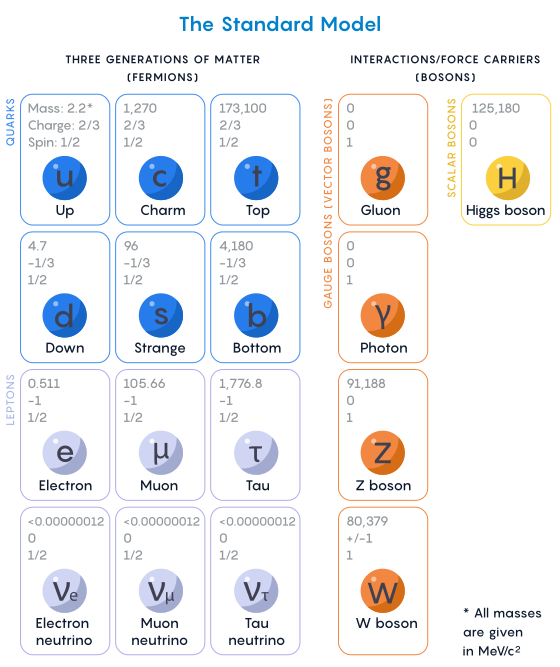
In its most familiar presentation, it contains 17 particles:
- 12 matter particles (fermions):
- electron, muon, tau
- three neutrinos
- six quarks
- 4 force carriers (bosons):
- photon (electromagnetism)
- W⁺, W⁻, Z bosons (weak force)
- gluon (strong force)
- 1 Higgs boson
From a textbook perspective, this is the “official” inventory.
“I think 17 is the right answer.”
— Melissa Franklin, Harvard University
But even this seemingly clean list contains hidden complications.
Antimatter: Do We Double the Count?
Each matter particle has a corresponding antiparticle with opposite charge. Electrons have positrons, quarks have antiquarks, and so on.
That immediately raises a question: should antiparticles be counted separately?
If we include them, the matter sector doubles:
- 12 matter particles → 24 particles including antiparticles
Some physicists argue this is double counting, since particles and antiparticles are tightly linked in the equations.
Others disagree:
- they are physically distinct
- they behave differently in the universe
- and matter dominates over antimatter in a fundamental asymmetry that is still not understood
So depending on the convention, the count already shifts.
Gluons and the Hidden Multiplicity of Forces
Even the force carriers are not as simple as they appear.
The gluon—the particle of the strong force—actually comes in eight distinct types, associated with different combinations of “color charge.”
So instead of:
- 1 gluon
a more detailed accounting gives:
- 8 gluons
This pushes the tally higher, even though experimentally they are hard to distinguish.
Now the count is already far beyond 17.
Quark Colors and Combinatorial Explosion
Quarks come in three “colors”:
- red
- green
- blue
Antiquarks have corresponding anticolors.
Because stable matter must be color-neutral, quarks combine in constrained ways inside protons and neutrons. But if you count every allowed color state independently, the number of distinct quark configurations multiplies dramatically.
At this level of detail:
- 6 quarks
- × 3 colors
- × antiparticles
= a much larger effective count of distinct states
Now the idea of a single “particle number” starts to break down.
Chirality: Left-Handed vs Right-Handed Matter
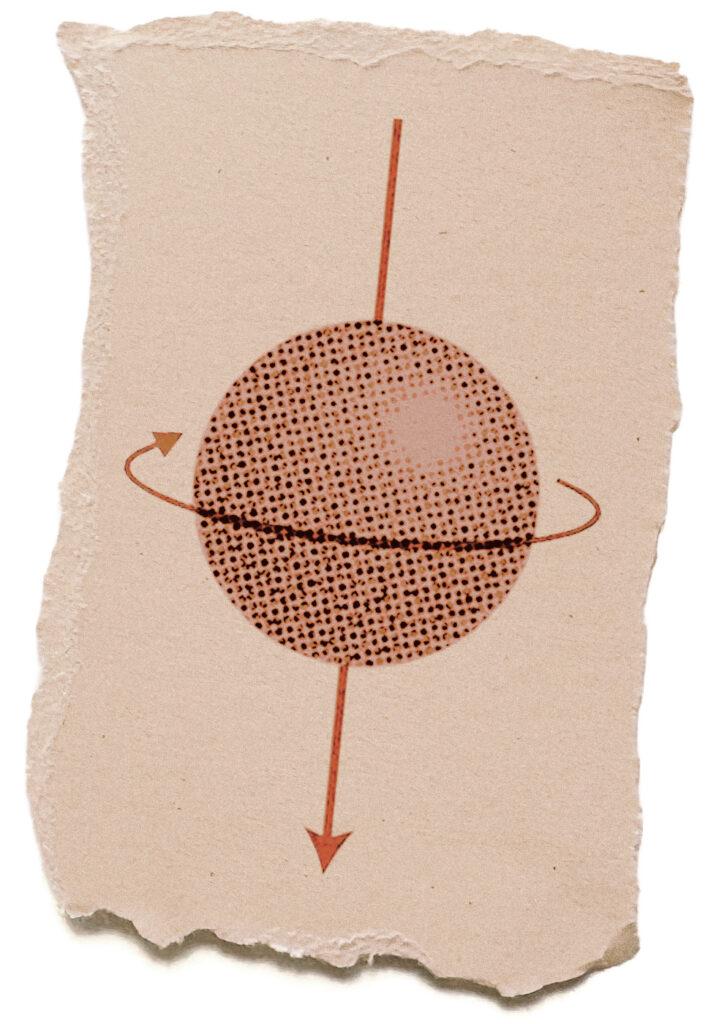
Another layer comes from chirality, or handedness.
Matter particles come in:
- left-handed states
- right-handed states
These are not interchangeable and behave differently under the weak force.
Similarly, force carriers have polarization states:
- photons and gluons: left- and right-polarized
- W and Z bosons: additional longitudinal polarization states
Once these are included, the number of distinguishable particle states grows again—this time to around:
118 distinct states
At this point, even “particle” becomes a matter of definition.
The Deeper Issue: Particles vs Degrees of Freedom
Physicists often prefer to talk not about particles, but about degrees of freedom—the independent ways a system can vary.
And here, things become even more scale-dependent:
- At low energies → few effective particles
- At high energies → many more particles appear
- At extreme energies (early universe) → additional heavy particles may exist
As David Tong puts it:
“As you go down in energy scale, you’re losing particles as you go.”
So the “number of particles” depends on how closely you look at nature.
The 2011 Surprise: A Precise Mathematical Count
A deeper approach comes from a mathematical result known as the “a-theorem”, proven by Zohar Komargodski and Adam Schwimmer.
It states that:
the number of effective degrees of freedom in a quantum field theory must decrease as you move to larger scales (lower energies)
This allows physicists to assign precise weights to different types of fields:
- scalar fields (like Higgs): 1 degree of freedom
- matter fields: 5.5 degrees of freedom
- force fields: 62 degrees of freedom
These are not arbitrary—they emerge from the structure of quantum field theory itself.
A Final Tally: 995.5 Degrees of Freedom
Applying these rules to the Standard Model gives:
(4 × 1) + (45 × 5.5) + (12 × 62) = 995.5
So instead of 17 particles, or 37, or 118, a deeper accounting yields:
995.5 fundamental degrees of freedom
Even physicists find this unsettling.
“I have no idea why this is what nature chose.”
— Zohar Komargodski
Why the Question Has No Single Answer
The confusion comes from a fundamental feature of quantum field theory:
- particles are not fundamental objects
- fields are
- and “particles” depend on how you probe those fields
Change the energy scale, and the particle inventory changes. Change the level of mathematical description, and the counting changes again.
Even symmetry choices—what you consider “distinct”—affect the result.
The Real Answer
So how many elementary particles are there?
It depends on what you mean:
- 17 → simplest textbook view
- ~30–40 → if you include antiparticles and force structure
- ~118 → if you count chirality and polarization states
- 995.5 → if you count fundamental field degrees of freedom
And beyond that, unknown physics (dark matter, gravity, early-universe states) may add more layers still.

Conclusion
The real lesson is not the number—it’s the instability of the concept itself.
Particles are not a fixed inventory of nature. They are different ways of slicing a deeper structure: quantum fields that change their apparent behavior depending on scale, energy, and mathematical perspective.
As one physicist put it, the answer may simply not be an integer at all.