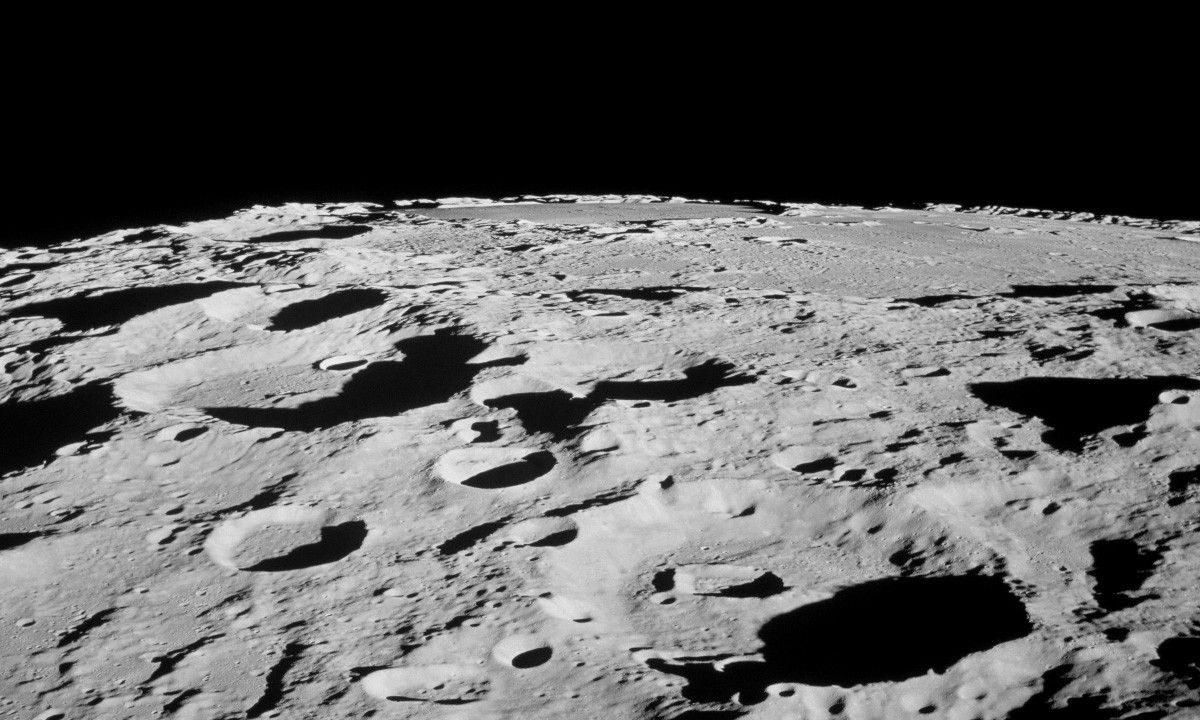
Humans have been staring at the Moon for as long as there have been humans. We have landed on it, collected rocks from it, orbited it dozens of times, and photographed it in extraordinary detail. And yet, after all of that, we still do not have a complete picture of what it is made of. A new research effort from Tokyo Metropolitan University may be about to change that — using a telescope small enough to hold in your arms.
The Map We Never Had
It might seem remarkable that a question as basic as “what is the Moon made of, and where?” remains unanswered. But creating a complete chemical map of the entire lunar surface has proven to be a stubborn scientific challenge.
Past missions, including NASA’s Apollo program and India’s Chandrayaan missions, produced partial geochemical maps. The technique used is called X-ray fluorescence imaging: when powerful solar X-rays strike the lunar surface, different elements emit characteristic X-ray signals that orbiting instruments can detect. The problem is coverage. Solar illumination near the lunar poles is too weak for reliable readings, detectors degrade over the lifetime of a mission, and no spacecraft has stayed in orbit long enough — or carried instruments sensitive enough — to map the whole surface systematically.
The result is a patchwork. Scientists know the chemistry of some regions well, others barely at all, and the polar zones — which happen to be among the most scientifically and practically important areas, given the presence of water ice — remain particularly poorly understood.
A Telescope the Size of a Lunchbox
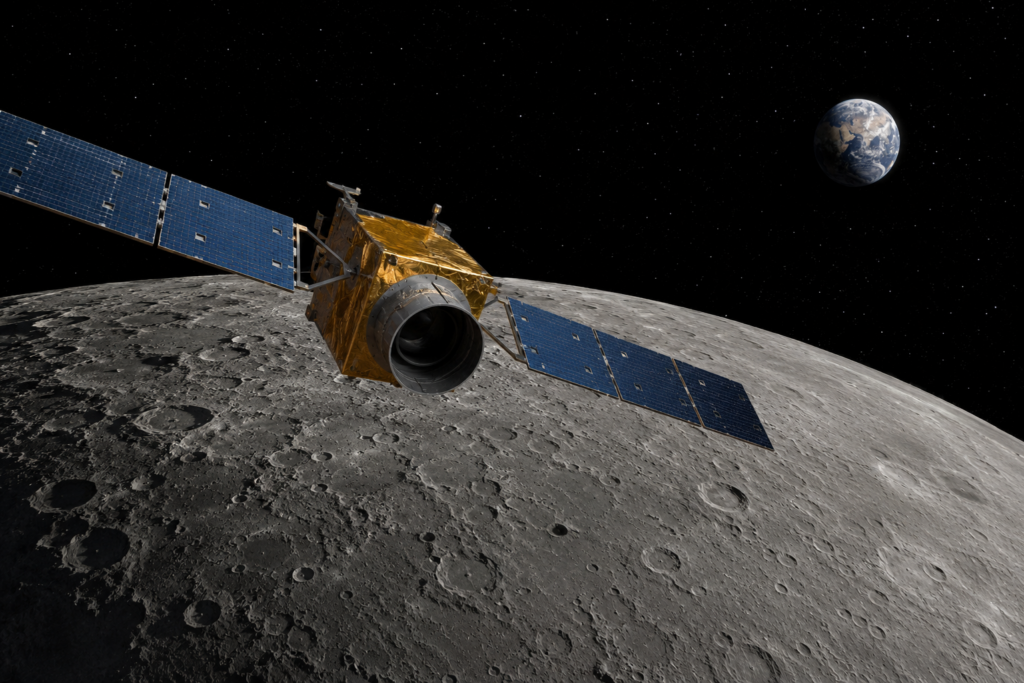
Researchers at Tokyo Metropolitan University, led by Airi Toida and Professor Yuichiro Ezoe, have now used detailed simulations to show that a compact new X-ray telescope could solve this problem. The instrument is based on technology originally developed for a Japanese small satellite mission designed to observe Earth’s magnetosphere.
The design is strikingly modest in size. The proposed telescope uses a MEMS-based lobster-eye X-ray optic, a CMOS detector, and an optical blocking filter — the whole package fits within what engineers call a 3U configuration, roughly the size of a thick hardback book, and weighs less than 10 kilograms. That is a dramatic departure from conventional X-ray telescopes, which are typically large, heavy, and expensive to launch.
What It Could Map, and How Fast
The simulations produced encouraging results. Assuming around 300 solar flares per year — the events that provide the strongest X-ray illumination of the lunar surface — a single compact telescope in lunar orbit could map five key elements across the entire Moon within about two years at a resolution of 70 by 70 kilometers per grid cell.
Those five elements are oxygen, iron, magnesium, aluminum, and silicon — the building blocks of the Moon’s geological story. Their distribution across the surface encodes information about how the Moon formed, how its crust differentiated over billions of years, and where different rock types and mineral deposits are concentrated.
The team also modeled a more powerful configuration: an array of 25 telescopes mounted together, which would achieve both finer resolution and faster coverage. Either approach, if flown as a real mission, would produce something that has never existed before — a complete map of elemental abundance across the entire lunar surface.
Why It Matters Now
This research lands at a moment when the Moon is back at the center of global space ambitions. NASA’s Artemis program is working toward returning astronauts to the lunar surface, with a crewed landing now targeted for 2028. The lunar south pole has been identified as the primary destination — precisely because of its suspected water ice deposits and its scientific interest.
A complete chemical map would not just satisfy scientific curiosity. It would tell mission planners exactly where specific minerals and resources are concentrated, help identify the safest and most scientifically valuable landing sites, and provide a foundational reference for all future lunar geology. Every mission that follows — crewed or robotic — would benefit from having it.
The Moon has been studied for half a century. The fact that we are still finding entirely new ways to understand it is, in itself, a reminder of how much remains to be learned from the world sitting just 384,000 kilometers away.