
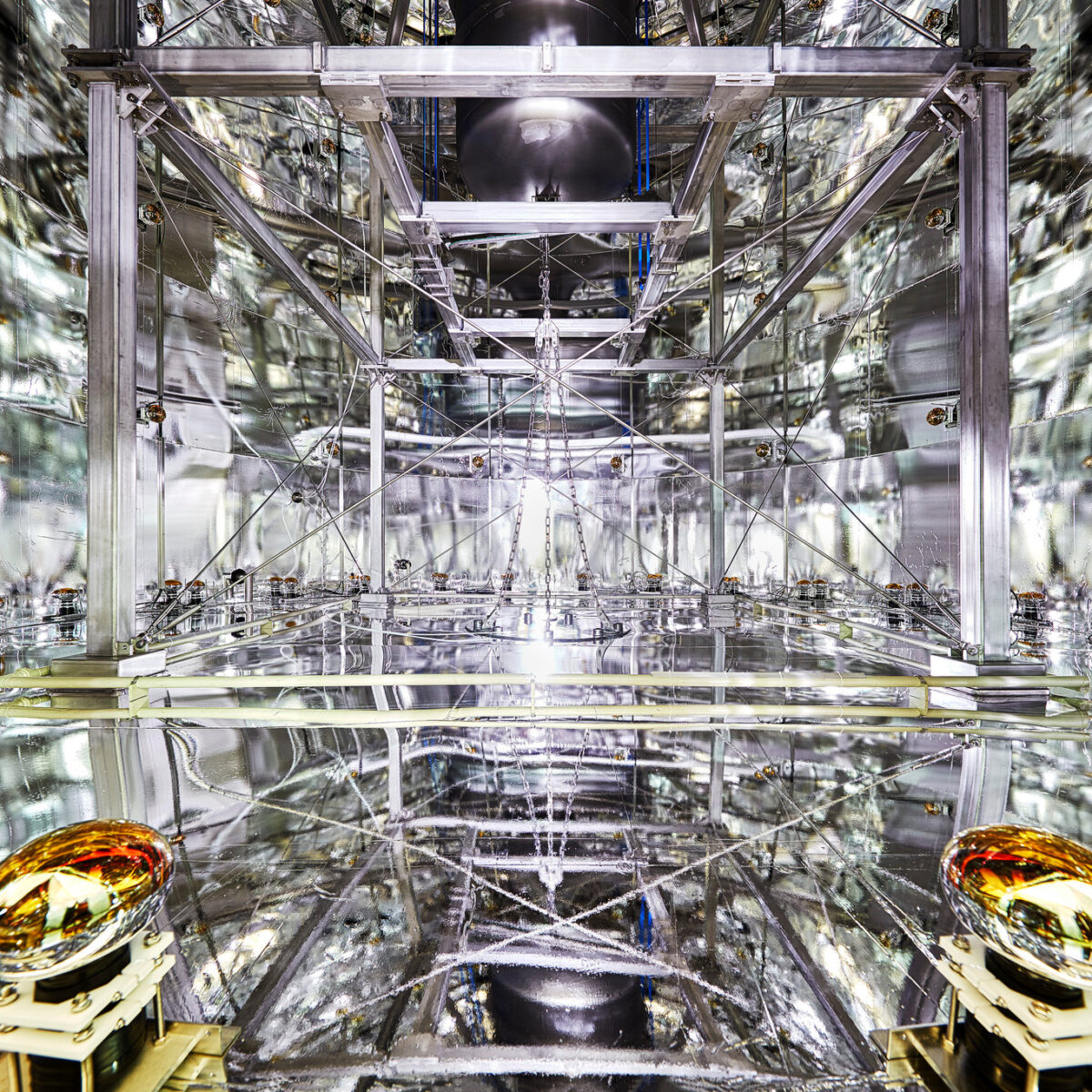
Most dark matter experiments look like something out of a sci-fi film. Enormous underground facilities. Tanks filled with hundreds of tons of liquid. International teams of hundreds of scientists. Price tags that could fund a small country. That’s the scale physicists usually work at when hunting for dark matter — the invisible stuff that makes up about 27% of the universe but has never been directly detected.
And then there’s Nabil Salama and Agit Akgümüs, two undergraduate students from the University of Hamburg, who decided to build their own.
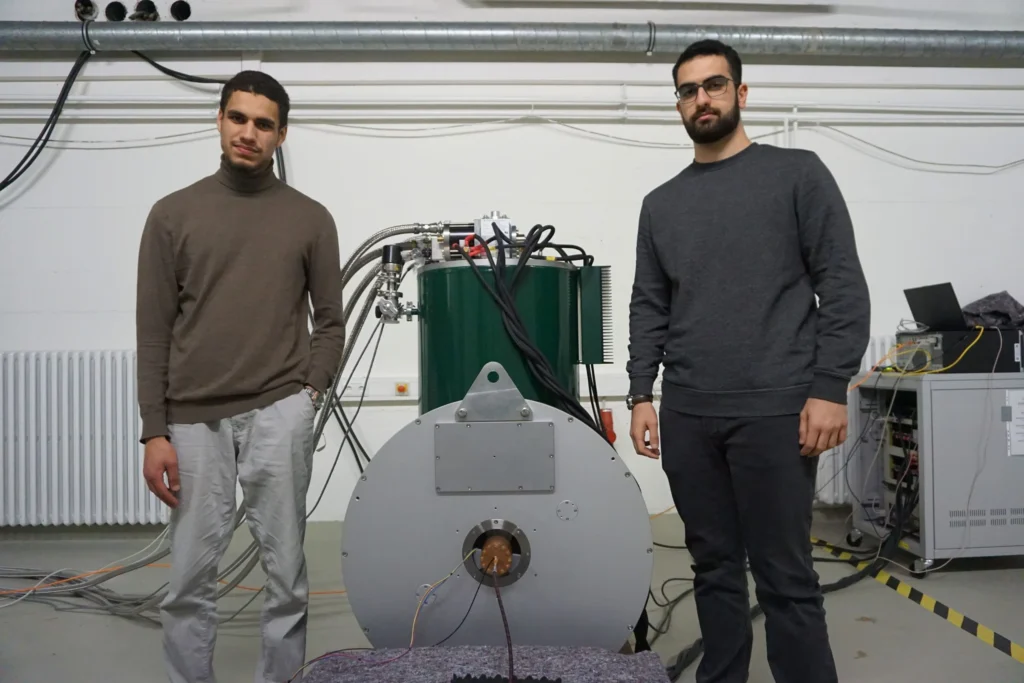
Their experiment, called SPACE, was recently published in the Journal of Cosmology and Astroparticle Physics. It didn’t crack the mystery of dark matter — that would be quite the undergraduate thesis. But it did something genuinely meaningful: it helped narrow down where dark matter isn’t, which in physics is often just as important as finding where it is.
Wait, What Even Is Dark Matter?
Before we get into the detector, let’s quickly set the scene. Dark matter is one of the biggest unsolved puzzles in all of science. We know it exists because of its gravitational effects — it bends light, it shapes galaxies, and without it, the math of the universe simply doesn’t add up. But no one has ever caught a dark matter particle. Not once. Despite decades of searching with increasingly sophisticated experiments, it has slipped through every net physicists have thrown at it.
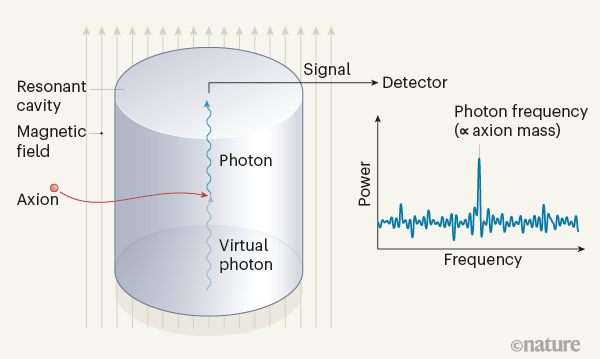
One leading candidate for what dark matter might actually be is a type of particle called an axion. Axions are extremely light — far lighter than even an electron — and interact with almost nothing around them, which is precisely why they’re so hard to find. The idea is that if you put axions in a strong magnetic field inside a specially tuned metal cavity, some of them should convert into tiny flashes of light (photons) that you can detect with sensitive electronics. It’s a bit like trying to hear a single whisper in a stadium — but with the right setup, it’s theoretically possible.
A Student Budget, A Real Science Problem
Salama and Akgümüs didn’t have a massive facility. What they had was a student research grant from the University of Hamburg’s Hub for Crossdisciplinary Learning, access to university equipment, and guidance from researchers connected to MADMAX — a much larger dark matter experiment operating in the same space. From those resources, they built a compact resonant cavity detector: a small, precisely machined copper cylinder paired with receiver electronics, cables, and measurement instruments.
“The detector we built is essentially the simplest version of a cavity detector for dark matter,” Salama explained.
That simplicity was intentional. The goal wasn’t to out-compete the giant experiments. It was to strip a sophisticated technique down to its core and show that even a minimal version can produce real scientific results.
What the detector actually did
The cavity was placed inside a superconducting magnet that reached a field strength of 14 tesla — roughly 280,000 times stronger than Earth’s magnetic field. It was tuned to a precise radio frequency corresponding to a specific axion mass. During the experiment, the team monitored the cavity for any unexpected signal that could indicate axions converting to photons. They found nothing. And that’s fine — in fact, that’s the point.
Not Finding Something Is Still a Discovery
This is one of those things that trips people up about science. A null result — not detecting the signal you were looking for — isn’t a failure. It’s information. By running their experiment and detecting nothing, Salama, Akgümüs, and their team were able to rule out axions with certain properties in a specific mass range. They drew a new line on the map.
“The search for axions involves exploring a wide range of possible parameters,” said Akgümüs. “Our experiment covers only a small region, with limited sensitivity, but it still helps narrow down the possibilities. To actually find the particle, we need either much larger experiments or many different ones. Each experiment must probe a specific region.”
Think of it like searching a huge, dark building for a lost key. Each room you check and cross off the list brings you closer to finding it — even when you come up empty-handed. The students just checked one room that had never been properly searched before.
Why This Story Matters Beyond the Physics
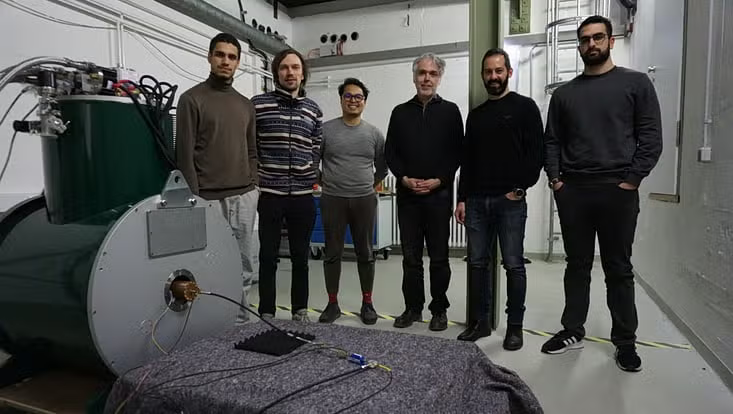
What makes this story genuinely exciting isn’t just the science — it’s who did it. These weren’t postdoctoral researchers with years of specialized training. They were undergraduates, working with limited resources, who identified a real gap in the experimental landscape and filled it. Their paper is now part of the permanent scientific record, cited alongside the massive collaborations that dominate this field.
It’s a reminder that physics doesn’t always have to be about the biggest machine in the room. Sometimes the most interesting contribution is a careful, humble, well-executed experiment that asks a focused question and answers it honestly — even if the answer is “not here.”
Dark matter is still out there, somewhere, waiting to be caught. And apparently, even a few students with a copper cylinder and a strong magnet are in the hunt.