
Fusion energy has long been one of the most ambitious goals in modern physics. Often described as the process that powers the Sun and other stars, nuclear fusion promises a future of clean, abundant energy with minimal carbon emissions. For decades, fusion has been “just around the corner,” but recent progress has made 2026 an especially important moment for the field.
Scientists and engineers around the world are reporting breakthroughs in plasma control, reactor design, and experimental results. The big question remains: are we truly getting closer to practical fusion power, or are the toughest challenges still ahead?
What Makes Fusion So Powerful?
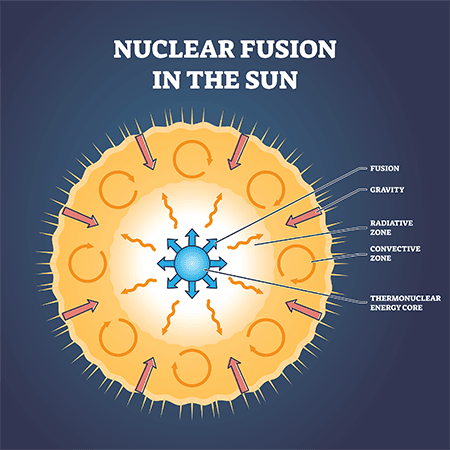
Fusion occurs when two light atomic nuclei combine to form a heavier nucleus, releasing enormous amounts of energy. The most commonly studied reaction involves hydrogen isotopes, such as deuterium and tritium.
Fusion has several major advantages:
- It produces no direct carbon emissions
- It generates far less long-lived radioactive waste than fission
- Fuel sources can be extracted from seawater and lithium
- The reaction is difficult to run out of control
In theory, fusion could provide a nearly limitless energy supply. In practice, achieving the necessary conditions is extremely difficult.
The Main Challenge: Containing Plasma
To make fusion happen, fuel must be heated to temperatures above 100 million degrees Celsius, creating a state of matter known as plasma. At these temperatures, no solid material can touch the fuel, so scientists must use advanced confinement methods.
Magnetic Confinement
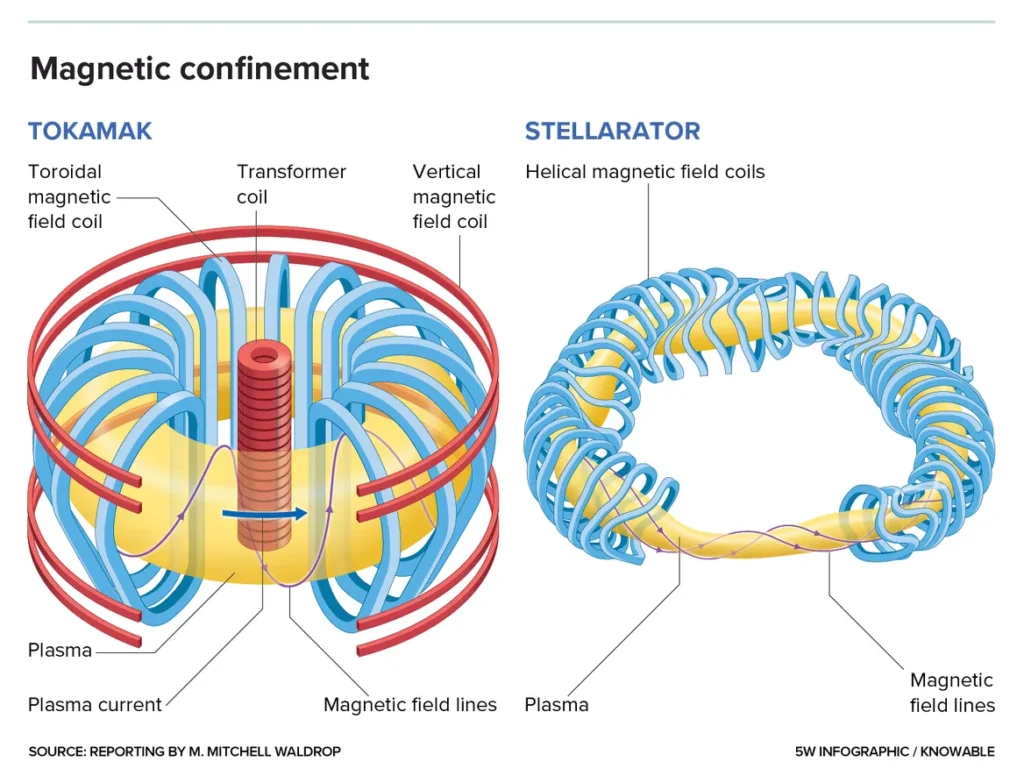
The most developed approach uses strong magnetic fields to hold plasma in place inside a donut-shaped reactor called a tokamak.
Major tokamak projects include:
- ITER (France)
- JET (United Kingdom, now concluded)
- EAST (China)
- SPARC (United States, in development)
Inertial Confinement
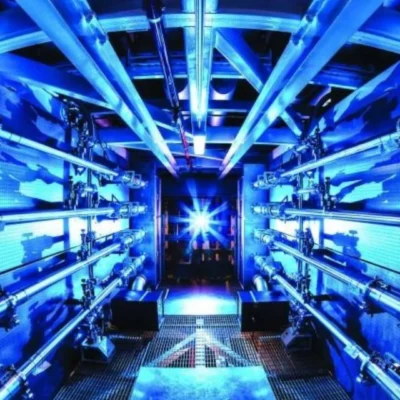
Another method involves compressing fuel pellets using powerful lasers. This is the approach used by the National Ignition Facility (NIF) in the United States.
Key Fusion Developments Leading Into 2026
Fusion research has accelerated significantly in recent years, with both government programs and private companies pushing forward.
Progress at ITER
ITER remains the world’s largest fusion experiment. Its goal is to demonstrate a burning plasma that produces far more energy than is used to heat it.
Although ITER has faced delays, it continues to be central to long-term fusion planning. Work in 2026 is focused on construction milestones and preparing key reactor systems.
ITER is not expected to generate electricity, but it is designed to prove fusion can be sustained at large scale.
Private Fusion Companies Moving Faster
One of the biggest changes in the fusion landscape is the rise of private-sector investment. Companies are developing smaller, faster experimental reactors using new technologies.
Some focus areas include:
- High-temperature superconducting magnets
- Compact tokamak designs
- Alternative reactor geometries like stellarators
- Fusion-fission hybrid concepts
This competition is increasing innovation, though most private projects are still in early testing phases.
Better Plasma Control Through AI
In 2026, artificial intelligence is becoming a valuable tool in fusion research. Machine learning systems are being used to predict plasma instabilities, optimize magnetic confinement, and improve reactor performance.
Since plasma behavior is highly complex, AI-assisted control may be critical for future reactors that need stable operation over long periods.
The Breakthrough Everyone Watches: Net Energy Gain
The most publicized fusion milestone is “ignition,” when a reaction produces more energy than the fuel absorbs.
NIF achieved net energy gain in experimental conditions, marking a scientific breakthrough. However, this does not yet translate into a power plant, because:
- The full laser system consumes far more energy than the reaction produces
- Experiments are not continuous
- Reactor-scale engineering remains unsolved
So while ignition is a major step, commercial fusion requires much more.
Remaining Obstacles Before Fusion Power Plants
Even with progress, several challenges still stand between fusion experiments and real-world electricity generation.
Engineering and Materials
Fusion reactors must withstand:
- Extreme heat
- Neutron radiation damage
- Long operating cycles
- Complex maintenance requirements
Developing materials that can survive inside a fusion environment is one of the hardest tasks in the field.
Fuel Supply and Tritium
Tritium is rare and must be produced inside the reactor using lithium breeding systems. Scaling this process is essential for long-term fusion energy.
Cost and Infrastructure
Fusion plants will require major investment, and building the first commercial systems will be expensive. The transition from laboratory success to industrial energy production is still a long road.
Are We Truly Getting Closer in 2026?
Fusion is closer than it was a decade ago. Breakthroughs in ignition experiments, stronger magnets, better plasma modeling, and increased funding have created real momentum.
However, fusion is still not an immediate solution to global energy needs. Most experts believe commercial fusion power is likely still years or decades away, depending on technological progress and sustained investment.