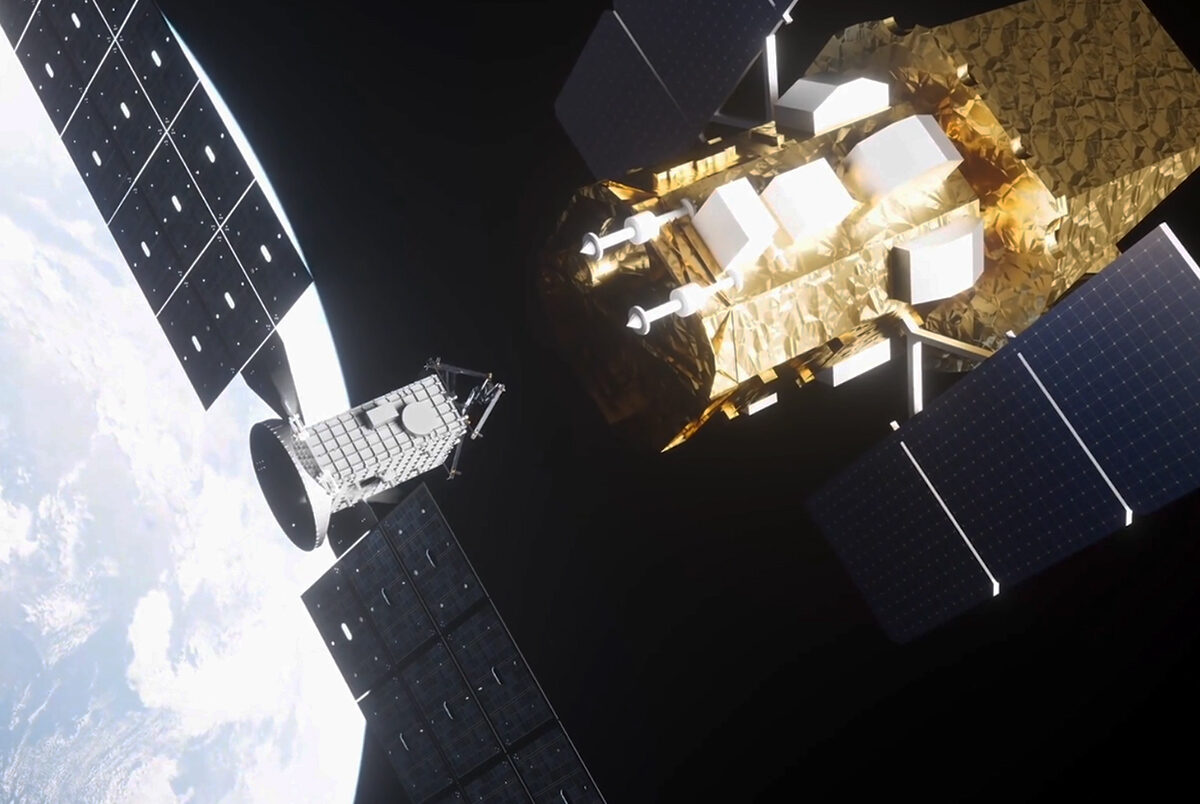
Before the end of the month, a robotic spacecraft will launch on an unprecedented rescue mission. Its target is NASA’s Neil Gehrels Swift Observatory, a 22-year-old space telescope that may otherwise reenter Earth’s atmosphere before the end of the year.
No previous mission has attempted to robotically capture and boost the orbit of an active scientific satellite at this scale, aside from limited demonstration flights. Yet astronomers argue Swift is too scientifically valuable to lose. The telescope detects bursts of gamma rays, X-rays, and ultraviolet light from violent cosmic events such as exploding stars. After NASA realized in 2024 that Swift’s orbit was decaying faster than expected, it contracted U.S. startup Katalyst Space Technologies to design a rescue spacecraft in under a year. In the coming weeks, the success of that gamble will be tested.
“The whole community is very much rooting for this to work,” says Daniel Perley of Liverpool John Moores University, an astronomer who studies fast-changing cosmic phenomena similar to those Swift observes.
In February, NASA paused Swift’s science operations, placing it in a low-drag orientation to slow orbital decay. Still, researchers say its absence is already being felt.
“We are already missing it badly,” Perley adds. “It hurts to not have it there.”
A Telescope in Decline
NASA launched Swift in 2004 into an orbit roughly 600 kilometers above Earth. Over two decades, that altitude has dropped to about 370 kilometers.
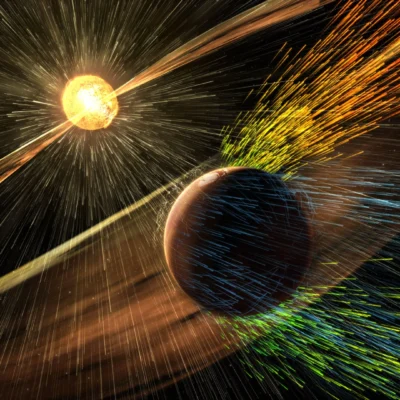
Originally, engineers expected it to remain in orbit into the early 2030s. However, an unexpectedly strong peak in the Sun’s 11-year activity cycle increased atmospheric drag, expanding Earth’s upper atmosphere and accelerating Swift’s descent. Mission teams concluded the telescope now had only months left, not years.
A Rapid, Unprecedented Rescue Plan
In September 2025, NASA awarded a $30 million contract to Katalyst Space Technologies, a startup specializing in in-orbit servicing and refueling. Remarkably, within seven months the company completed a dedicated robotic rescue vehicle.
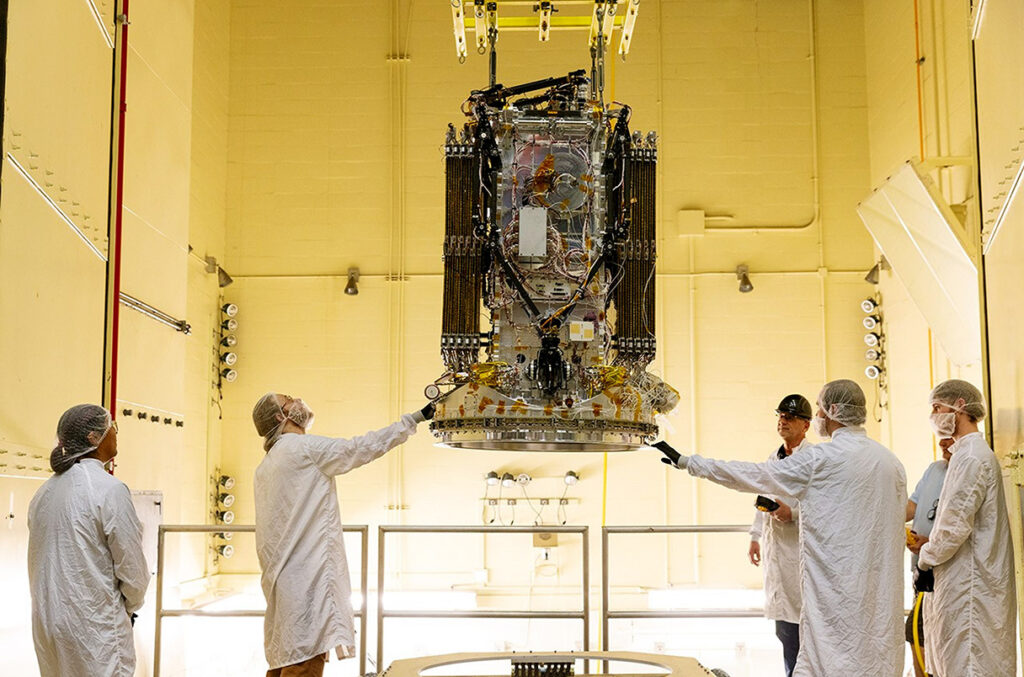
The spacecraft, named LINK, was delivered to NASA’s Goddard Space Flight Center after testing in early May. The 400-kilogram vehicle is scheduled to launch aboard an air-launched Pegasus XL rocket from Kwajalein Atoll in the Pacific Ocean.
“This is not the normal way that we do things, on this kind of time scale,” says Brad Cenko, Swift’s principal investigator.
Once in orbit, LINK will spend one to two weeks catching up with Swift. During its approach, it will image the aging telescope from multiple angles so engineers can assess its condition and potential damage from debris or micrometeorites.
If all goes as planned, LINK will use three robotic arms to grasp Swift and gradually raise its orbit over a period of more than six weeks, returning it to approximately 600 kilometers. After completing the maneuver, the rescue spacecraft will release the telescope.
High Risk, High Reward Engineering
The mission is widely viewed as technically risky, but also potentially transformative for satellite operations.
“Even if they don’t capture—and there’s a lot that can go wrong—the accelerated timelines and the fact that a lot of decision-making is going to happen on orbit sounds like a ridiculously cool thing to be doing,” says Angadh Nanjangud of Queen Mary University of London.
NASA hopes the demonstration will open the door to routine satellite servicing, including boosting, refueling, and repair of aging spacecraft. This capability could extend mission lifetimes and reduce costs across space science and commercial satellite fleets.
The idea has direct implications for major observatories. The Hubble Space Telescope, which was repeatedly serviced by Space Shuttle missions, is gradually losing altitude and could reenter Earth’s atmosphere within the next few decades. A robotic servicing mission could potentially replace future crewed interventions.
“I know that the Hubble folks are watching very closely,” Cenko says.
Nanjangud notes that NASA, traditionally cautious with mission design, is taking a rare leap into high-risk operational innovation. “It’s surprising that NASA is championing something like this,” he says.
Why Swift Matters
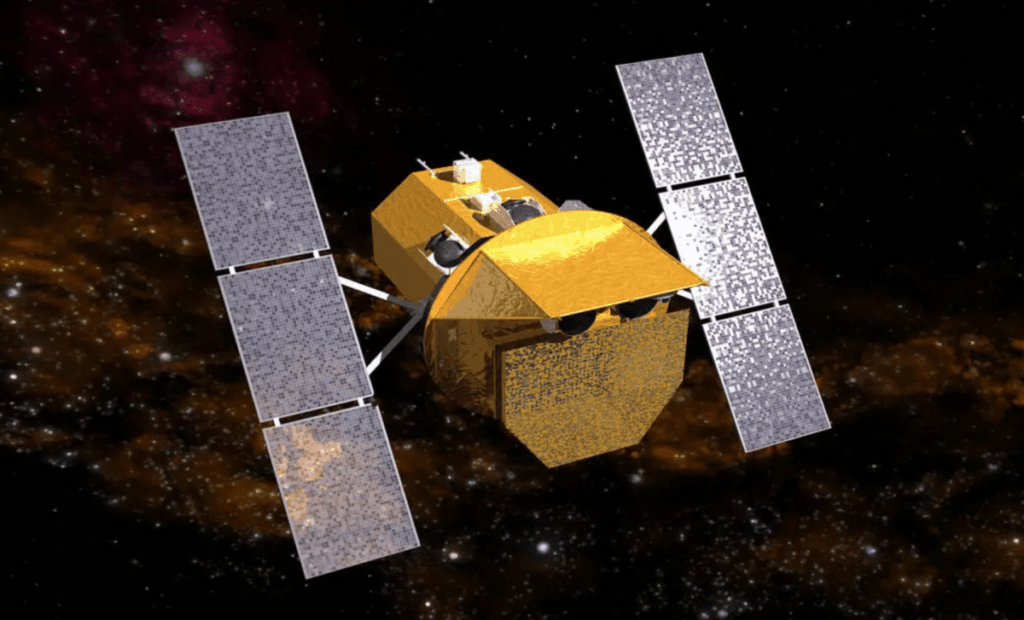
For astronomers studying transient cosmic events, Swift is uniquely valuable. It was designed to detect gamma-ray bursts—extremely brief but powerful flashes of high-energy radiation from deep space.
Its wide-field “burst alert” instrument monitors about one-sixth of the sky continuously. When it detects a burst, Swift can reposition its X-ray and ultraviolet telescopes toward the source in under two minutes, enabling rapid follow-up observations.
It is also routinely used for external alerts from ground- and space-based observatories, receiving roughly five observation requests per day.
Swift has contributed to major discoveries in high-energy astrophysics, including:
- Establishing that many gamma-ray bursts originate from massive stars collapsing in supernova explosions
- Identifying short gamma-ray bursts as the result of neutron star mergers
- Observing the 2022 “BOAT” event (Brightest Of All Time), the most powerful gamma-ray burst recorded
A Last Chance to Extend Its Life
“There’s no other space telescope that has the flexibility to observe targets with the kind of cadence and the kind of response time that Swift did,” Perley says.
For researchers, the scientific value of even a few additional years of Swift operations justifies the risk of the mission. As the rescue attempt begins, the astronomy community is watching closely to see whether robotic spacecraft servicing can become a new standard in space operations—or remain an extraordinary one-off experiment.